Search DU CTLAT Blog

Monday, March 12, 2012

19th Annual HBCU Faculty Development Network Conference Proposal Deadline Extended to March 26, 2012!


54 Travel Grants!

$1,000.00 each!

Available to presenters at the HBCUFDN 2012 Annual Conference

Submit proposal to be eligible!

Deadline has been extended to Monday, March 26, 2012!


 19th Annual HBCU Faculty Development Network Conference
Orlando, Florida
October 18-20, 2012

Theme: Innovating and Inspiring in a Global World

We cordially invite you to participate in the 19th Annual HBCU Faculty Development Network Conference to be held in Orlando, Florida on October 18-20, 2012. With this year’s conference them: “Innovating and Inspiring in a Global World,” we invite and challenge our HBCU Faculty Development Network colleagues to develop new ideas and ways of thinking about innovation in teaching and at the same time inspire our students to perform to their optimal level of scholarship. For most of our students, the traditional approaches of teaching and learning may be outdated. Although the role and responsibility of the college professor remains the same, the classroom environment, the students, and the tools needed to engender more impactful teaching and learning outcomes have drastically changed. Indeed, when this generation of students comes into the classroom, they seem to expect an environment that mirrors their world.


Additionally, because of the exponential growth of knowledge and its availability anywhere and anytime, it has become increasingly difficult for college faculty to facilitate the motivation and inspire students to learn. Instructional faculty cannot afford to remain passive with teaching modalities; innovative ways to inspire students and prepare them for a global world must be found. This means that all who are concerned about educating our students to function in a global society have a responsibility to adapt teaching and learning to the needs of the students rather than the students adapting to the needs of the instructional personnel. Orlando is the ideal setting for this year’s conference. The City of Orlando, Florida, is a vacation mecca for people from around the world. In fact, the entire Orlando region is home to an incredible assortment of family entertainment attractions, second to none. Among them are:


Aquatica Water Park by SeaWorld: This attraction is a unique twist on the traditional

water park, and it has something of interest for everyone. Vacationers from the United

States and from around the world come to splash, slide and take the plunge.


Discovery Cove, Orlando: This is another great Florida family attraction from the

creators of SeaWorld as here you can actually swim with the Dolphins. Interactions with

the dolphins and other animals is carefully supervised and controlled for the safety of

both sea creatures and people.


Walt Disney World: Its family of theme parks include Animal Kingdom, Epcot Center,

MGM Studios, plus a complex of resorts, nightlife, water parks, and other family

attractions. This complex gave birth to Orlando as a family vacation center.


Universal Studios Florida: A real, working film and TV production facility with rides,

shows, and movie sets.


We look forward to seeing you in Orlando this October!

Jeton McClinton, Conference Coordinator, (jeton.mcclinton@jsums.edu

Laurette Foster, Conference Co-Chair (lbfoster@pvamu.edu)

Steve Rozman, Conference Co-Chair and Executive Director (srozman@aol.com)

Eugene Hermitte, President (ehermitte@gmail.com)

Barbara Albert, Program Coordinator (balbert@dillard.edu)


Strands of the HBCU Faculty Development Symposium

Collaborative Models

Active Learning and Engagement

Curriculum Design and Revision

Diversity and Globalization

Learning Across the Curriculum & Learning Communities

Educational Technology

Assessment and Evaluation

Civic Engagement and Social Justice

Special Topics in Health, Natural and Engineering Sciences

NOTE: See strands link on the HBCUFDN website for detailed descriptions:


General Information

All proposals are due on or before Monday, March 26, 2012. Notifications of acceptance of proposal will be sent by May 11th, 2012. All proposals should be submitted using the form provided via the Call for Proposals link. Please submit your completed form online beginning Tuesday, January 31st on the HBCUFDN website at http://www.HBCUFDN.org. The deadline for receiving proposals will be midnight (Central) on Monday, March 26, 2012.


Session Types

The Network welcomes proposals for a variety of session types, including the following:

1. Pre-conference Workshops:*

3-hour interactive workshops

2. Concurrent Sessions:

75-minute interactive sessions

75-minute roundtable discussions

poster presentations

For all session types, proposals should describe work that is systematically designed,   implemented, and assessed, and make clear how participants might apply, extend, or adapt the ideas they learned. Specific information about the different session types follows.


Pre-conference Workshops

Pre-conference workshops emphasize learning-by-doing and provide participants the opportunity to explore topics in depth through a combination of hands-on activities, reflection, and discussion. As such, proposals should include a detailed outline describing the types of learning activities and interaction you are planning.  Additionally, proposals should indicate the maximum number of participants and any special room set-up you might need. Audio-visual equipment, including a LCD projector, flipchart, and wireless internet access, may be requested. Computer laboratories are not available and presenters must provide their own laptops. The vast majority of pre-conference workshops are three hours in length. These workshops will take place the morning of Thursday, October 18th. Pre-conference workshops are advertised in the conference registration materials. We will notify you of pre-registration numbers before the conference and request that you be prepared for and accommodate on-site registrants as well.


Concurrent Sessions :

75-minute interactive sessions:

These sessions combine brief presentations or panel discussions with methods that engage all participants. We recommend that your sessions be interactive, collegial sessions—not of lecturing or reading papers to passive audiences. Session leaders are encouraged to incorporate meaningful activities as appropriate, selecting from a variety of methods such as presentation, demonstration, discussion, application, feedback, group and individual work, and role playing. We encourage you to creativity model exemplary teaching! Audio-visual equipment, including a LCD projector, flipchart, and wireless internet access, may be requested.


Roundtable Discussions:

Roundtable discussions provide an opportunity for various kinds of interactions in a smaller group setting such as discussion of a concept, approach, program, issue, case study, or reading. This format is ideal for getting to know people who may be facing similar issues to you, for exploring new ideas, and sharing practices. It is contrary to the spirit of a roundtable discussion for the facilitator to make a formal presentation. No audio-visual equipment is available for roundtable discussions and none may be used by presenters in this format.


Poster presentations:

The poster session provides an ideal format for presenting your research, program, or work-in-progress in a context where you can engage in many one-on-one discussions with colleagues. Attractive posters using large, readable fonts and illustrative graphics will attract conference participants and invite conversation about your work.


Each poster presenter will have a 4x8 foot poster board, a supply of thumbtacks, and a small presenter’s table. The poster board can easily accommodate large format posters or individual 8½”x11” sheets. The presenter’s table is ideal for displaying materials, handouts, business cards, etc. Note that the poster session site has no multi-media support, no guaranteed wireless internet connection, and no power outlets. Personal laptops may be used during the poster session, but we recommend bringing an additional battery, a backup laptop, and/ or paper handouts.


Guidelines for Proposals


Eligibility

All are welcome to submit a proposal. Once a session is accepted, each presenter and co-presenter must agree to be a member of the HBCUFDN and be a paid registrant at the conference.


Number of proposals per person

Each attendee may propose up to one pre-conference workshop as either the primary or co-presenter.


Each attendee may also propose up to two concurrent sessions but he/she may be the primary presenter for only one of these sessions. For the second session, he/she must be listed as a co-presenter. Interactive sessions, roundtable discussions, posters presentations, and joint HBCUFDN sessions are included in this two-session limit.


Example #1: An attendee may submit one concurrent session proposal as the lead

presenter and a second concurrent session proposal as co-presenter.

Example #2: An attendee may submit two concurrent session proposals as co-presenter.

Example#3: An attendee may submit one pre-conference workshop proposal as the

lead presenter, a concurrent session proposal as lead presenter, and a second

concurrent session proposal as co-presenter.


Sale of materials and the solicitation of consulting work

To avoid the possibility of a conflict of interest, the Network does not permit in any conference session the sale of materials before or during the conference nor the solicitation of presentation materials after the conference. Furthermore, The Network does not allow presenters to solicit consulting work during any session listed in the program. Session presenters are permitted to use materials they have created and to refer to consulting work that they do, but neither materials nor services may be offered for sale during the session. Pre-conference workshops may receive permission to charge an additional fee for materials (such as books), to be collected with the conference registration fee.


Because the Network recognizes and values the expertise of its members, the conference schedule includes a Vendor Exhibit, a specific time when materials can be sold and consultation work can be solicited. Questions about this conference practice should be addressed to the Executive Director or the Conference Chairs.


Submission Process

Proposals may be submitted online beginning Tuesday, January 31st on the HBCUFDN website at http://www.HBCUFDN.org and will be due by midnight (Central) on Monday, March 26, 2012.


Detailed submission instructions are provided on the website.

Before you prepare a proposal, please ensure that you have read the guidelines for

proposals. Failure to follow these guidelines may lead to the rejection of a proposal.


Components of the Proposal

(Note: All proposals are blind-reviewed in accordance with the guidelines described

above.)

Contact information

Session title (no more than 10 words)

Session abstract (no more than 100 words)

Designation of the strand.

Please select the type of session best suited for your proposal. Be sure that

there is a fit between what you intend to accomplish and the type of session you

choose.

Session description (no more than 500 words)

o State expected outcomes for session participants.

o Outline the session activities and plan for interaction (please model

exemplary teaching and learning practices) For poster presentations,

focus on the manner in which you plan to present your work rather than on

the type of interaction you anticipate.


** Appropriately and meaningfully connect your proposal to the overall conference

theme: Innovating and Inspiring in a Global World.
 
Barbara M. Albert, Executive Assistant to the Provost
Dillard University, Office of Academic Affairs
Program Coordinator, HBCU Faculty Development Network
(504) 816-4216 (office)
(504) 816-4144 (fax)
balbert@dillard.edu

Share/Bookmark

Friday, March 9, 2012

Turnitin FREE Archived Webinar: New Demands, New Approaches: Achieving Information Literacy and Competency in the 21st Century


Share/Bookmark

Turnitin FREE Archived Webinar: Achieving Information Literacy and Competency


30-Minute W
30-Minute Webcast Series
Achieving Information Literacy and Competency
Date: Thursday, February 2, 2012


Share/Bookmark

You Are Invited To: "The Impact of Environmental Disasters on Vulnerable Populations" Conference 2012 @ Dillard University


Hosted By:
University of Alabama at Birmingham
LSU Health Sciences Center
Dillard University

Sunday, March 25, 2012 - Monday, March 26, 2012
Dillard University
2601 Gentilly Boulevard
New Orleans, LA 70122

Register Today

Accommodations

Registration Deadline: Monday, March 19, 2012


Share/Bookmark

Tomorrow's Professor: Student Development Theories


In the early twentieth century, college campuses became a natural setting in which to apply theories from the emerging disciplines of psychology and sociology (Evans et al,. 2010). Although the earliest emphasis in student development stressed vocational guidance, the 1937 publication by the American Council of Education (ACE) advocated for focusing on the development of the ?whole student? to facilitate better contributions by college graduates to society as a whole. A subsequent ACE statement (1949) reinforced the ?whole student? perspective and stressed the importance of recognizing and attending to the needs of diverse kinds of students.

Formal theories regarding student development began to surface in the middle of the twentieth century (Pascarrella & Terenzini, 2005). The focus of student development varies from research that is targeted at a specific aspect of the student experience (such as learning style) to researchers who are more comprehensive or ecological in their consideration of multiple variables that make a difference in student experience.

Cognitive Complexity

One of the first formal theories of student development has proved to be one of the most enduring. Interviewing male students at Harvard, Perry (1968/1999) described how students evolve in their cognitive complexity during the college years. He observed students progressing from simplistic or ?dualistic? view of the world (that is, thinking of the world in ?black and white? terms) to more complex and contextual deliberations as a function of their liberal arts experience. Inspired by the work of Piaget, Perry was particularly attentive to the characteristics of the transition points from one stage of cognitive complexity to the next, including the impact of individual differences (Knefelkamp, 1999).

Later cognitive theories expanded upon Perry?s observations. Pointing to the limitations of using an all-male population, Belenky, Clinchy, Goldberger, and Tarule (1986) applied Perry?s stages to explain cognitive growth in female students. They posited five separate ?ways of knowing? that women experience, from the position of silence, a mindless and voiceless stance, through a position of constructed knowing, which recognizes that knowing reflects thoughts, emotions, beliefs, and the characteristics of the learner herself. King and Kitchener (1994) further speculated about other cognitive transformations that were possible beyond the limits of the relativism stage that Perry described.

Moral Development

Kohlberg (1976) developed a stage theory of moral development that has had a big impact on the understanding of student development. He asked male students at Harvard to reason their way through various moral dilemmas and captured the patterns in their rationales. Kohlberg characterized the students? moral decision making as representing three levels of development. At the preconventional level, individuals have not fully grasped or adopted societal norms regarding morality. As such, their judgments tend to be focused more on the individual impact of actions than on societal concerns. In conventional reasoning, individuals embrace social norms and appear to demonstrate obedience to authority; in effect, this stance protects the status quo.

Postconventional reasoners transcend social norms and justify their moral decisions based on a richer understanding of complex moral situations and an appreciation for universal and generalizable principles.

Kohlberg?s work remains controversial. Gilligan (1982) argued that an obedience-based schema did not adequately account for moral reasoning in women. She counterproposed a ?care based? scheme to augment Kohlberg?s ?justice based? theory as more appropriate for the patterns she discovered in women students. Similarly, some critics (such as Heubner &Garrod, 1993; Logan, Snarey, & Schrader, 1990) argue that Kohlberg?s stage theory may not accurately portray moral reasoning in all cultures. However, Pascarella and Terrenzini (2005) concluded that college enhances moral reasoning skills beyond a level that would be expected from maturation alone.

Identity Formation

Perhaps the most influential of the early theories is that of Chickering (1969; Chickering & Reisser, 1993). Chickering conducted comprehensive psychological assessments of students in their sophomore and senior years with the explicit goal of providing guidance to educators to enhance student development. Supporting the ?whole student? philosophy, Chickering identified seven vectors along which development occurs among college students: achieving competence, managing emotions, moving through autonomy toward interdependence, developing mature interpersonal relationships, establishing identity, developing purpose, and developing integrity. He argued that student growth is not a linear process and suggested that students may have to recycle through issues as they become more individuated.

Marcia (1966) targeted identity formation processes in young adults that contribute understanding to predictable student dilemmas. Marcia?s four-part taxonomy of identity status reflects the certainty, confusion, crisis, and commitment that can be applied to many elements of the undergraduate journey through college. Marcia posited the state of diffusion as an orientation in which students show little motivation in resolving identity concerns. They are vulnerable to conforming, in part because they are unable to make an individual commitment. In Marcia?s foreclosure state, students prematurely commit to a position because they simply rely on authority figures to forge their direction. For example, students may come to college convinced they should pursue a particular major and show no variation from that decision even when their performances suggest their selected majors might not be good matches for their abilities. Students can also demonstrate moratorium, in which ambivale
nce emerges. Original decisions may prove unworkable, and that recognition can fuel a crisis that can often propel a student into the final status: identity achievement, the healthiest of the four stages. Individuals who have achieved identity have thoughtfully resolved the identity crisis and are more willing to take risks and examine multiple viewpoints. For example, a student may abandon the cherished family goal of her becoming a physician in favor of a career in botany because she recognizes the botany major as a better fit with her interests and abilities.

Learning Styles

Kolb (1984) developed the concept of experiential learning to emphasize how the quality or efficiency of learning can differ according to individual preferences for modes of learning. He constructed a four-part taxonomy to describe those differences. Accommodators are geared toward action and prefer trial-and-error strategies in their problem solving. Divergers show special strengths in coming up with imaginative alternatives in their problem-solving attempts. Convergers show a preference for working with technical challenges rather than social ones. Assimilators are more comfortable with ideas than with people and prefer theoretical modeling and abstract reasoning to other forms of learning.

In practice, faculty and other student developers may demonstrate their own learning styles in their architecture of learning and curricular experience. However, awareness that any given group of students will have variable learning preferences encourages the development of an array of learning experiences that appeal to all learning styles rather than rigidly playing out the preferences of the architect.

Personality Variables

An emerging common practice among student developers is the use of personality inventories to capture individual differences. One of the most commonly used approaches involves the Myers Briggs Type Indicator (MBTI) (Myers & McCaulley, 1987). Based loosely on Jungian theory, the MBTI captures and contrasts student personality styles along the following dimensions: extroversion versus introversion, thinking versus feeling, intuiting versus sensing, and judging versus perceiving. The resulting personality code communicates distinctive ways in which a student might approach an interpersonal or academic challenge. College officials have used the MBTI to identify or rule out career aspirations, to promote personal insight about style differences among peers, and even to select roommates with the best potential for surviving the strain of living together.

The MBTI has demonstrated beneficial effects for the enhancement of leadership skills (Fitzgerald & Kirby, 1997). Many students attest to the usefulness of personality inventory as a means of giving them insight when they encounter others who behave in unpredictable ways. However, the test is not without its critics (see Pittenger, 1993), who expresses concern about the instrument?s reliability and validity. Although MBTI results may be stable in adulthood, the preferences expressed during the college years may be much more transitory. In addition, MBTI preferences may not readily translate to stable skills sets. Some critics conclude that widespread use of the MBTI in college setting may overreach the inventory?s original purpose.

Ecological Models

More recent scholarship in areas that enlighten student development has attempted to produce more comprehensive developmental models that have an ecological foundation. Kegan (1994) created a stage theory based on resolving evolutionary challenges that emphasized the skill needed to cope with complex modern life. He noted that troubles develop in college settings when students engage with what he termed ?the socialized mind,? or ?third order consciousness.? Although capable of abstract thinking, students may be swayed by feelings and personal biases and may rely too heavily on designated authorities, such as college teachers, for how to think or believe. In contrast, faculty may have reached ?the fourth stage of consciousness,? which Kegan called ?the self-authoring mind.? Most academic professionals can self-regulate and demonstrate independence, but they also may inappropriately expect students to navigate their lives with the same conscientiousness, rather than accept their own role in promoting these chances in students.

Baxter Magolda (2001) conducted longitudinal research on how students move from socialized mind status to self-authorship. She concluded that college environments succeed best in helping students make the transition to appropriate self-reliance when the facilitators provide validating feedback to students about their potential, pay attention to the learner?s experience when designing the curriculum and supporting learning experiences and accept that learners will actively construct meaning out of those experiences in college.

Regardless of the specific puzzle pieces, researchers have tried to contribute to optimizing student development, and universities have incorporated research principle in several emerging best practices that have been widely adopted to enrich student experience and facilitate their development. In this next section, we?ll explore some contemporary practices that report success in promoting student development.


Share/Bookmark

Inside Higher Ed: March 9, 2012


International education experts debate whether developing countries should focus their time and money on colleges and universities that educate the elite or the masses.

An international survey of scientists finds that many are unhappy with the lack of career opportunities and family-friendliness at their institutions.

'How Economics Shapes Science'
Economist's new book explains the many ways financial forces affect scientific research -- and those who hope to practice it.
Share/Bookmark

Inside Higher Ed: Santorum and Higher Ed

Santorum's views and history on higher education
March 9, 2012 - 3:00am
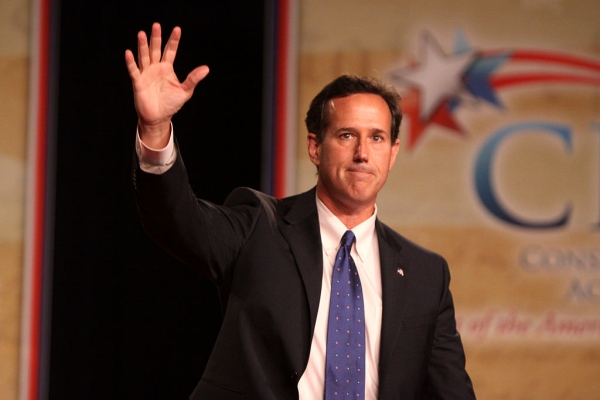
As a senator from Pennsylvania in 2001, Rick Santorum touted federal support for higher education. He boasted of increases in the maximum Pell Grant, earmarked millions of dollars in federal budget bills for Pennsylvania colleges, and cultivated a reputation as a supporter of historically black colleges and universities, including two in his home state.
Now, as a presidential candidate, Santorum seemingly opposes not only federal support for colleges and universities but some of the underpinnings and goals of the American higher education system. He railed against colleges and universities as “indoctrination mills” lost to Satan. Then he derided President Obama’s push for more Americans to pursue higher education: “What a snob.”
One result of his comments: a sudden, unexpected prominence for higher education in the race for the Republican nomination. Until recent weeks, issues facing colleges and universities had been almost entirely absent from the candidates’ platforms and the race so far, with the exception of the DREAM Act -- which was discussed mostly as a proxy for the immigration debate.
Higher education policy is neither a wedge issue nor an especially prominent one for many voters, and although Obama has made college affordability a central plank of his re-election campaign, many predicted that Republicans wouldn’t speak on the issue until they had a nominee.
The results of voting Tuesday, when former Massachusetts governor Mitt Romney won six states to Santorum's three, suggest that the former Pennsylvania senator may not be that nominee. Still, his wins this week -- and an upcoming slate of primaries in Southern and Midwestern states, which have generally favored his candidacy -- seem to indicate that he and his signature issues will continue to influence the race for the Republican nomination, and perhaps the general election this fall.

After Santorum’s comments about Obama, political commentators homed in on the accusation of snobbery, and prominent Republicans, including some governors and Newt Gingrich, rushed to say that they too want Americans to go to college. Higher education had joined the debate, even if the question – whether encouraging college attendance is a good thing – wasn’t the one many colleges would choose.

“Issues surrounding higher education have been surprisingly salient” in the 2012 race, said Neil Gross, a professor of sociology at the University of British Columbia who is writing a book on politics and academe.
Santorum’s attacks on university culture aren’t unprecedented, Gross said – Ronald Reagan ran for governor of California in 1964 by promising to “clean up the mess in Berkeley.” But arguing directly against academe, as Santorum did, is relatively rare. “It’s been sort of a persistent undercurrent in the Republican primary election so far,” Gross said.
That undercurrent comes even though the Republican field is more educated than the vast majority of Americans. Each of the four remaining Republican candidates holds at least one advanced degree. They include a Harvard M.B.A and J.D. (Romney), an M.D. (Ron Paul) and the first major contender in decades with a Ph.D. (Newt Gingrich). Santorum has a bachelor’s degree from Penn State, an M.B.A from the University of Pittsburgh and a law degree from the Dickinson School of Law, now the Penn State law school.
Santorum's campaign did not respond to a request for comment from Inside Higher Ed. His website doesn't mention higher education issues and barely mentions elementary and secondary education, except to advocate for a limited federal role: protecting civil rights in a "common sense fashion" and enabling "essential research."
Santorum's transformation, from a senator who praised higher education to a candidate who attacks it, might in part be a reflection of changing roles and changing times. Santorum left office before lawmakers began eschewing earmarks under new transparency rules, and many viewed funneling money to local projects -- including those at colleges and universities -- as part of the job description. When he was elected to the Senate in 1994, Pell Grants were not a partisan issue. Santorum’s current attacks on education policy are playing to a perennial distrust of academic elites, experts say, but it’s unclear whether they will maintain their appeal.
For a few weeks, Santorum’s attacks on college-going were consistent and vehement. “I understand why Barack Obama wants to send every kid to college, because of their indoctrination mills, absolutely,” he said in a Feb. 23 interview with talk-show host Glenn Beck. He accused colleges of destroying students’ religious faith, saying “62 percent of kids who go to college with a faith commitment leave without it.” In a Troy, Mich., appearance when he made the now-infamous “snob” comment, he referred to “good, decent men and women” who were “not taught by some liberal college professor.”
He later said his grades suffered at Penn State because of his political beliefs, and that he would be “very careful about the colleges and universities our children go to.” (Santorum’s oldest daughter is a student at the University of Dallas, a Roman Catholic college; she has taken time off to participate in her father's campaign.)
Santorum’s accusations drew an indirect retort from Obama. The president said in remarks to the National Governors’ Association that his call for Americans to get at least a year of postsecondary education could encompass career or technical training or community college – not necessarily a liberal arts education or a bachelor’s degree. Gingrich, Santorum’s chief rival for the Republican anti-Romney vote, called such a plan “perfectly reasonable.”
Santorum didn’t cite a source for his accusation that colleges strip students of their faith, and most surveys have found that while religious commitment declines somewhat in college, the drop is not nearly as dramatic as Santorum suggested. A recent study found that people generally become less religious between the ages of 18 to 24, but that the drops are greater for those who do not attend college than for those who do.
“What Santorum is saying is, ‘We’re pure. We’re born with these innate virtues. We don’t need a liberal education, these extra condiments of learning,’ ” said Elvin Lim, associate professor of government at Wesleyan University and the author of The Anti-Intellectual Presidency (Oxford University Press), a book on presidential rhetoric. “You can see both the flattery there, and also a sort of atavistic, Republican nostalgic romantic vision of the individual.”
Anti-intellectualism is a way for politicians to signal to audiences, especially those who did not attend college themselves, that they have something in common with voters, Lim said. And there is a segment of voters in the Republican base who disdain college professors and higher education in general: a recent survey by the Pew Research Center for the People & the Press found that 36 percent of Republicans (and 47 percent of Tea Party Republicans) believe colleges have a negative influence on the country, even though an overwhelming majority said college was a good investment for them personally.
Santorum is a populist candidate, and bashing elites – whether in business, as liberal populists do, or in academe, for conservatives – is essential to populism, said Gross, the sociologist. Conservative antipathy to colleges and college professors has other sources, including the fact that most professors do tend to be liberal. “There are a variety of reasons that motivate their animosity,” he said. “The populist part is not insignificant.”
Lim, who said Santorum was trying to fuse anti-establishment sentiment with anti-intellectualism, said he personally despises the tactic. “Assuming, as Santorum does, that some of us don’t want to go to college or don’t need to go to college, is exactly the worst form of condescension,” he said.
Whether it’s a winning strategy, though, is less clear. In days immediately following his anti-college blitz, Santorum was the leading candidate for Michigan voters who never went to college, according to exit polls. But he lost the state overall, and some strategists not affiliated with the campaign blamed his statements on several issues – including his rhetoric against colleges – for the loss.
So far, his campaign appears to have struck a chord among voters who did not go to college: they voted in stronger numbers for Santorum than Romney in both Ohio and Tennessee on Tuesday. In Ohio, a close contest, the difference was significant: 5 percentage points, not enough to win the state for Santorum, but enough to keep the vote close.
Still, he moderated his rhetoric in the days before the vote. Before Tuesday’s primaries, Santorum said everyone should have the chance to go to college, as long as they were not forced to attend.
“That’s fine,” Santorum said, according to The Los Angeles Times.“All my political career I’ve supported [that].”
Support in the Senate
During Santorum’s years in the House and Senate, he also advocated for the federal government’s role in supporting colleges and universities financially in terms that would now be anathema to his campaign.
“I believe that there needs to be an active federal role in higher education because institutions of higher learning constitute a nationwide educational infrastructure,” Santorum wrote on his Senate website, according to a version archived in 2001. “Clearly, higher education is a national concern to be addressed, in part, on a national basis.”
During his time in office, Santorum was generally supportive of private colleges and universities and federal student aid, Mary Young, vice president for government relations at the Association of Independent Colleges and Universities of Pennsylvania, wrote in an e-mail to Inside Higher Ed.
“Either he or his staff always met with the private college presidents when we requested to discuss federal issues,” Young said. “He seemed to have a good understanding of the problems and issues of Pennsylvania independent higher education.”
Young said she did not remember particular issues where Santorum was a strong advocate, but an archived version of his Senate website includes pages of press releases boasting of the benefits he brought to Pennsylvania colleges, private and public. Santorum and his fellow Pennsylvania senator, Arlen Specter, then a Republican, directed tens of millions of dollars toward Pennsylvania colleges. At the time, laws on transparency in earmarking – setting aside federal funds for projects in home districts – had not yet taken effect, and the practice was common.
Many of those benefits came as federal research money, military and otherwise: $3 million for Army research on hypothermia at the University of Pittsburgh, $1.7 million to Penn State for construction of a testing ground for undersea military equipment; $11 million to Drexel University in Philadelphia to develop communications technology for the Defense Department. Some purchased equipment for scientific research: $1 million for a specific type of mass spectrometer at the University of Pittsburgh; $200,000 for molecular science equipment at the University of Scranton.
Many other, smaller earmarks paid to develop new curriculums, upgrade technology and construct new buildings at Pennsylvania colleges: $100,000 for technology updates to a library at Lafayette College; $100,000 to Moravian College for a science initiative; $400,000 for a life sciences building at Franklin and Marshall College. Specter and Santorum announced $420,000 in technology infrastructure upgrades at Bucknell; $200,000 for a performing arts center at Shippensburg University, and many similar efforts over several years.
Santorum also took part in an annual forum on historically black colleges and universities, the only member of Congress to do so every year, according to press releases about the event. He hosted the event at least twice, telling the colleges about federal help available to them to build capacity and improve education on their campuses. The founder of the forum, Representative J.C. Watts of Oklahoma, said Santorum’s “commitment to the HBCU community has been invaluable.”
“Through grants and policy initiatives, Rick Santorum is proud to further the priorities of Pennsylvania's colleges and universities,” his Senate website read.
A Friend to For-Profits
In his Senate career, Santorum also pointed out his support for for-profit institutions.
“Regrettably, it is often just such schools which have difficulty keeping their doors open,” he wrote in a column on his Senate website. “Student loan default rates are disproportionately high among the very population of students these schools seek to serve.
"A high default rate threatens the ability of these schools, which usually operate on a tight budget, to remain open. Federal regulations have established a default rate threshold over which a school cannot go without the risk of closure. Because of the need these schools fill, I am committed to developing legislative vehicles which provide the critical support they require.”
He has continued that support into his presidential campaign, accusing Obama of waging a war on for-profit education and promising that a Santorum White House would be friendlier to proprietary education.
“This comes as a shock to some people, that the president would have a war on something,” Santorum said at a Detroit campaign event in February. “He believes that private-sector schools are somehow evil and they're abusive, and his Education Department has done everything they could to make it harder for them to compete for loans and other things and to stay in business.”
For-profit education, as well as community colleges, are necessary to help train people for jobs, Santorum said. He said he would work to make sure that for-profit colleges are “available and around and funded like any other school."
“I will tell you, I will have a very, very different attitude toward private schools and training schools and technical schools,” he said.
While nothing is settled in the topsy-turvy Republican primary race, Santorum appears to have little chance of catching up to Romney in the crucial delegate count, which could determine the nominee at the Republican National Convention this fall. Still, his success so far indicates that his influence on the race -- one way or another -- will be enduring.
His choice to inject college attendance into the debate could have an impact, as well. "He’s trying to link one form of animus, anti-establishmentism, with another, anti-intellectualism," said Lim, the political scientist. "The former are institutions, the latter are the individuals who fill the institutions... It works if you’re able to use the anti-intellectualism to pivot to a larger case that the Republican Party is trying to make to the base."


Read more: http://www.insidehighered.com/news/2012/03/09/santorums-views-and-history-higher-education#ixzz1odlw8Des
Inside Higher Ed
Share/Bookmark

Welcome to CITELINE @ MIT!


Welcome to Citeline, a service to facilitate the web publishing of bibliographies and citation collections as interactive exhibits and facilitate the sharing of this type of data.


Citeline User's Guide


Here are some of our featured interactive publication exhibits:
        Erik Demaine's Selected Publications
317 publications

Share/Bookmark

Thursday, March 8, 2012

SIR II Process at Dillard University


Tomorrow (Friday, before 5pm) is the deadline to submit the SIR II excel file. Students will receive the SIR II invitation ONLY via their DU email. Faculty interested in high response rates are strongly encouraged to require students to send emails from their DU account. Program Chairs and Coordinators are asked to ensure that their departments are fully represented. In order to fairly judge your annual course performance, it is required that you complete this process.

Please contact Dr. Morelon ( cmorelon@dillard.edu ) immediately with any questions or for further support.

Phyllis Worthy Dawkins
Provost and Senior Vice President for Academic Affairs
Dillard University
2601 Gentilly Boulevard
New Orleans, Louisiana 70122
Voice:  504-816-4368
Fax:      504-816-4144
pdawkins@dillard.edu
President, Professional and Organizational Development (POD) Network
Former President, HBCU Faculty Development Network
Share/Bookmark

Dillard University Spring 2012 Mid-term Grading UPDATE


Dear Faculty,

Due to the power outage this week Dr. Dawkins has extended mid-term grading until Saturday, March 10, 2012 at 12am.  Mid-term grades are due on Saturday, March 10 at 12am.

Please share with adjunct faculty.

If you have any concerns please let me know.


Best, Ms England

Pam England
Registrar/Director of Records and Registration
Dillard University
Office of Records and Registration
2601 Gentilly Boulevard New Orleans, LA 70122
504.816.4705 (Office)
504.816.4391 (Fax)
pengland@dillard.edu

"Your Avenue of Opportunity"
___________________________________

Faculty:
The Chairs have asked that you provide documentation of grade submission prior to the deadline.  Please respond by either sending them a copy of your grades or an email stating which courses you have submitted.  The purpose of this request is to ensure and monitor grade submissions.  If you need technical support entering your grades, please contact your Department Chair.  Do not seek assistance from the Registrar’s Office staff.

Remember, Spring Break begins after all grades have been submitted.

Thank you.

Phyllis Worthy Dawkins
Provost and Senior Vice President for Academic Affairs
Dillard University
2601 Gentilly Boulevard
New Orleans, Louisiana 70122
pdawkins@dillard.edu
Voice:  504-816-4368
Fax:      504-816-4144
President, Professional and Organizational Development (POD) Network
Former President, HBCU Faculty Development Network


Share/Bookmark