Search DU CTLAT Blog

Monday, March 19, 2012

Dillard University Library 2012 Book Sale!


Share/Bookmark

UB Web Seminar Series: "Is room-based lecture capture


[image] UB Web Seminar Series
[image] alarm clock
This is to remind you that you are registered for the webcast,
"Is room-based lecture capture
better for 21st century learning?"

scheduled for
March 20 at 1pm ET.
To access the event, click here.
You may join up to 10 minutes before the meeting start time. No login information or password is required. You will need to use your computer’s speakers or headset to listen to the audio; there is no telephone dial-in capability.
To confirm that your computer meets the requirements to participate in this event, please click here to test.

Or, click to view a list of requirements.

Please contact lhaight@promediagrp.com, if you have any questions.
[image] Mediasite by Sonic Foundry

Share/Bookmark

Dillard University FROM THE OFFICE OF INSTITUTIONAL EFFECTIVENESS AND ASSESSMENT


FROM THE OFFICE OF INSTITUTIONAL EFFECTIVENESS AND ASSESSMENT

Dr. Carla L. Morelon, Director

NEWSLETTER: Week of March 19, 2012

 MARCH 19          SPRING 2012 SIR II REMINDERS TO STUDENTS
Continue reminding students that (1) the online course evaluation will arrive as an invitation from the Educational Testing Service ONLY via their DU email and (2) they should complete the evaluations as soon as they become available. Failure to do so could possibly result in low response rates for your course(s).

MARCH 20          WEBINAR:  Increasing Course Evaluation Engagement: New Patterns in Response Rates
Visit the following link to register (http://info.connectedu.com/course-evaluation-engagement) for the 10:00am webinar and find strategies to ensure maximum response rates for your online course evaluations.

MARCH 26          SPRING 2012 SIR II WINDOW OPENS
·Review the attachment to confirm that your course is scheduled to be evaluated. ALL adjunct courses will be evaluated.
·Review the dates and locations your courses are scheduled to go to a lab. Everyone should not expect a lab, because there was not enough space.
·Volunteer to facilitate one another’s course evaluations. A professor’s presence will minimize any opportunities for students to influence one another.

MARCH 29          EVALUATION OF COURSES IN LABS BEGINS
Review the attachment to see if and when your courses are scheduled to go to the lab. Arrive at the allotted time. Otherwise, it could negatively affect the timing of classes that will follow.

APRIL 5                 SPRING 2012 SIR II WINDOW ENDS
                                This is the last day for any course to be evaluated. Access will be available until midnight.

APRIL 11               ASSESSMENT DAY (8:00am – 12:30pm, GEORGES AUDITORIUM)
·         Faculty are asked to bring their classes to the Auditorium to complete various assessments.
·         Assessments include:
o   Faculty Advising Survey (see attachment): all majors are expected to visit the Auditorium to complete the paper survey. Freshmen will also be asked to complete a survey for their CFYE Instructor.

o   National Survey of Student Engagement (NSSE) for Freshmen and Seniors: Invited students will be directed to a computer lab.

o   Collegiate Learning Assessment (CLA): Graduating seniors who have not yet completed the CLA will be given an opportunity to do so. This is a 75-90 minute proctored assessment.

o   Faculty Survey of Student Engagement (FSSE): Full-time faculty are asked to complete the online survey by the end of the day.

MAY 8                   SIR II REPORTS RELEASED
                                As faculty members submit Spring 2012 grades, their SIR II reports will be released.

MAY 8 -9              INSTITUTIONAL EFFECTIVENESS REPORTS AND WORKSHOPS
                                Expect more details soon.

DU Survey of Academic Advising
http://www.slideshare.net/ccharles/du-survey-of-academic-advising-form


Share/Bookmark

eSchools.com: Performance assessment making a comeback in schools

http://www.eschoolnews.com/2012/01/19/performance-assessment-making-a-comeback-in-schools/

performance-assessment-making-a-comeback-in-schools

It might take more time and effort, its advocates say—but when done right it can lead to a deeper analysis of students’ skills


Share/Bookmark

UNCF News: CELEBRITIES, BUSINESS LEADERS AND EDUCATION ADVOCATES ATTEND UNCF "A MIND IS" GALA AND RAISE $3.7 MILLION


March 05, 2012
Lowe's and ExxonMobil Contributions infuse UNCF Campaign for Emergency Student Aid (CESA) to help students graduate

A star-studded crowd of 1500 of New York’s elite joined UNCF (United Negro College Fund) at the Marriott Marquis in New York City, for an evening of inspiration and entertainment to celebrate "Game Changers" in education and raised $3.7 million to support scholarships and programs that reach more than 60,000 students at over 900 colleges and universities across the country each year.

Actor and Comedian Bill Bellamy emceed the evening, Grammy Nominated singer Ledisi and the world-renowned Tuskegee University Golden Voices Choir performed fitting musical selections that stirred the crowd. The Tuskegee University Golden Voices Choir opened the evening with beautiful renditions of The Star Spangled Banner and Lift Ev'ry Voice and Sing. Ledisi graced the stage with "It's a Wonderful World," followed by her motivational song "All Right" from her first Grammy-nominated album, "Lost and Found."

Lowe's Charitable And Educational Foundation (LCEF) and ExxonMobil helped UNCF exceed its fundraising goal and raise $1 million more than last year's inaugural "A Mind Is" Gala. The money, earmarked for UNCF Campaign for Emergency Student Aid (CESA), will provide emergency education assistance to college juniors and seniors impacted by the changing economy and challenges they face with college expenses that must be paid before they can graduate.

ExxonMobil, who started contributing to CESA three years ago with an initial contribution of $1 million dollars, announced a $500,000 matching grant. LCEF announced an additional $1 million contribution to CESA, which brings their giving total to $1.75 million.

In a moving tribute to the legacy of Shirley Chisholm, UNCF president and CEO, Dr. Michael Lomax presented the inaugural UNCF Shirley Chisholm Community Service Award for Innovation in Education to students he called, "the civil rights education activists of our generation. They are gifted, they are driven, and they are committed to succeeding where the education system has failed." Award recipients were Corps Members of Teach For America who attended UNCF member institutions. They were joined on stage by Wendy Kopp, CEO and Founder of Teach for America who also applauded their commitment to ensuring students in disadvantaged areas have a chance at receiving the education they need to prepare them for the future.

Two-time Super Bowl Defensive End, Justin Tuck was also honored at "A Mind Is" Gala. Justin and his wife Lauran are recipients of the UNCF President's Award for the literacy work they do through their Tuck's R.U.S.H. (Read, Understand, Succeed, Hope) for Literacy Foundation.

The New York City crowd knew very well about the work Justin has done on the football field. "If you watched the Super Bowl this year, you saw that Justin had two key sacks that turned that game around," said Dr. Lomax. "This is a man who changes games! But what you may not know is that behind each one of those sacks is his Foundation's matching funds initiative. To date, and with accompanying donations, R.U.S.H for Literacy has raised over $370,000 through this effort! This is the kind of philanthropist that turns accomplishment and charity into active solutions."

Justin accepted the award and praised his wife, who was unable to attend because she is in graduate school. He said the work they do with R.U.S.H is fun for them and urged the crowd to give back in whatever way they can. "It doesn't matter if you are a millionaire or a celebrity. You can always make a difference. Be pavers. Pave the way for kids."

Tamara L. Harris, Gala Chair and UNCF board member, also urged the crowd to be game-changers. "Speak to everyone in your world about this important cause to change the game for the students who need it the most."

To help a UNCF student stay in school, visit
www.uncf.org and click on the Campaign for Emergency Student Aid icon to make a donation.

About UNCF
UNCF (United Negro College Fund) is the nation's largest and most effective minority education organization. To serve youth, the community and the nation, UNCF supports more than 60,000 students at over 900 colleges and universities across the country. UNCF supports education through scholarships and other programs, by supporting its 38 member colleges and universities, and by advocating for the importance of minority education. UNCF administers more than 400 programs, including scholarship, internship and fellowship, mentoring, summer enrichment, and curriculum and faculty development programs. UNCF institutions and other historically black colleges and universities are highly effective, awarding 21 percent of African American baccalaureate degrees. The UNCF logo features the torch of leadership in education and its widely recognized motto, "A mind is a terrible thing to waste."® Learn more at
www.UNCF.org.

Share/Bookmark

Dillard University News: Dillard to Host "Crime and Punishment: African-Americans in a 'Post-Racial' (?) United States," March 20 - 22


March 2012


From March 20-22, Dillard University will host Crime and Punishment: African-Americans in a “Post-Racial” (?) United States, a symposium designed to explore problems of crime and incarceration in the U.S. today, their outsized impact on the black community, and the dubious concept of our society as “post-racial.” Criminal justice in New Orleans will also be addressed throughout three days of seminars and panel discussions.

Public officials, students, community organizers, current and former inmates, crime victims, criminologists and other scholars have been invited to take part in this dialogue, which aims to define problems of crime and incarceration; explore their root causes; illuminate their societal context; examine attempts at education and crime prevention; and offer suggestions to help justice and rehabilitation prevail for the common good.

Dr. James Turner (pictured), founding director of the Africana Studies and Research Center at Cornell University, will deliver the symposium’s opening lecture, “From Mass Enslavement to Mass Segregation to Mass Incarceration.” Dr. Michael Tillotson of the University of Pittsburgh will give a lecture entitled “A Post-Racial United States Society: Fact or Fantasy?” Dillard University’s Dr. Alan Colón, professor of African world studies, and Dr. Carroll Wiltz, professor of sociology, will convene the symposium.

All events will be held in the Georges Auditorium of the PSB on Dillard’s campus. The symposium is free and open to the public.

Crime and Punishment: African-Americans in a Post-Racial (?) United States
Schedule of Events

Tuesday, March 20

I. The St. Clair Drake Lecture: “From Mass Enslavement to Mass Segregation to Mass Incarceration.” 3 p.m.

II. Lecture: “A Post-Racial United States Society: Fact or Fantasy?” 7 p.m.

Wednesday, March 21

III. Roundtable Discussion: “Crime and Punishment in African-American Communities.”
3 p.m.

IV. Panel Discussion: “The Incarceration Experience: Inmates from Angola State Prison.”
7 p.m.

Thursday, March 22

V. Students’ Panel Discussion: “Mass Incarceration and Colorblindness.” 10 a.m.

VI. Roundtable Discussion: “The Struggle Continues: Where Do We Go From Here?” 7 p.m.

Share/Bookmark

Inside Higher Ed: Final rule issued on college health plans, birth control

 
New Rules for Health Plans
March 19, 2012 - 3:00am
WASHINGTON -- Filling in a key missing piece in the battle over religious institutions and insurance coverage for birth control, the Obama administration announced late Friday that most colleges’ student health plans will have to include contraceptive coverage at no cost.

The rules will apply to religious and secular colleges alike, although religious institutions have an additional year to comply with the new regulations. The administration’s final rule on student health plans, which will be published this week in the Federal Register, left one loophole: colleges that offer self-insured student health plans, rather than purchasing plans from an insurer to offer to students, will not be required to cover contraception.

The battle over whether religious colleges should cover birth control at no cost for their employees has been fierce. A medical panel recommended contraceptive coverage as a key part of preventive care for women of child-bearing age, but many religious employers argue that providing contraception, including the morning-after pill and sterilization, goes against their beliefs. A compromise by the Obama administration -- that insurers, not employers, would pay for and offer the birth control coverage -- did little to diminish the controversy.
The rules announced Friday extend the same compromise to religious colleges’ student health plans: the insurer, not the college, will pay for the coverage, but it must be included in all policies. Still, the requirement that students’ birth control be covered is likely to provoke an outcry among colleges that prohibit or discourage premarital sex on moral grounds.
"It appears that the administration is attempting to address many of the issues that we have raised in our communications with them by accommodating student health care plans and self-insured institutions," Paul Corts, president of the Council for Christian Colleges and Universities, said in an e-mail to Inside Higher Ed. "However, we retain our belief that our institutions have a constitutional right to a religious exemption and not just an administrative accommodation." The organization had pushed for an exemption that would extend to colleges rather than just houses of worship, which would mean they would not have to offer birth control coverage at all.
Both Roman Catholic and evangelical colleges had sued in recent months over the new policy, arguing in part that they can’t preach against birth control or premarital sex at required religious services and then offer students contraception free of charge.
The exception for self-insured health plans, under which colleges pool students’ premiums to pay for health care rather than purchasing an insurance policy, applies to secular and religious institutions alike and exists because of a “hole in the statute,” Department of Health and Human Services officials said in a conference call with reporters on Friday. About 200,000 students are believed to rely on self-insured plans -- a small fraction of the total number of students covered on all college health plans, which HHS has estimated to be between 1 and 3 million.
Many more employers self-insure for their employees’ health insurance, and those plans will not be exempt from the birth control requirement, the officials said. The third-party administrator whom employers frequently hire to administer self-insured plans will probably be responsible for the cost of birth control for employees of religious institutions.
Other Changes to Student Plans
The final rule on student health plans dealt with more than birth control. It also imposed new regulations first proposed more than a year ago. College health plans have been criticized for low lifetime benefit caps, high profit margins for colleges, and exclusions that leave students with no coverage for illnesses that are expensive but not uncommon.
Under the new rules, lifetime and annual benefit maximums will be phased out. Benefit caps can be no lower than $100,000 in the 2012-13 school year and $500,000 in the 2013-14 school year, and after that will be eliminated completely. The medical loss ratio -- the percentage of premiums that must be spent on health care programs and quality improvement -- must be at least 70 percent in 2013 and 80 percent in 2014.
Colleges warned that the delay in issuing the final rule -- a proposed rule was published in February 2011 -- was causing problems for institutions, in part because the cost of health plans affects how much financial aid students receive. In a March 2 letter to HHS Secretary Kathleen Sebelius, seven higher education associations led by the American Council on Education urged the administration to release the final rule immediately.
“In the absence of final regulations, it is difficult for schools to complete negotiations with their issuers,” the groups wrote.
The American College Health Association is pleased that the rules have finally been released, the group’s president, Anita Barkin, wrote in an e-mail to Inside Higher Ed. The group is still studying the regulations, including how they differ from the proposed rule put forward last year. Some of the differences pertain to the requirements for the medical loss ratio and benefit caps.
“We are pleased that the final regulations, although somewhat different in terms from the draft regulations, continue to provide a path to compliance for schools that currently offer lower annual dollar limits than those required under [the Affordable Care Act],” Barkin wrote.
Young Invincibles, an advocacy group that fought for the passage of the health care law, praised the release of the regulations, including the contraception provision, and called the rules “a major victory for students and their families.”
The Association of Catholic Colleges and Universities did not respond to a request for comment late Friday, and the Association of Jesuit Colleges and Universities declined to comment on the new regulations.


Read more: http://www.insidehighered.com/news/2012/03/19/final-rule-issued-college-health-plans-birth-control#ixzz1paCGuNmX
Inside Higher Ed
Share/Bookmark

Thursday, March 15, 2012

TLT Group TGIF 3.15.2012


Eighth issue, Volume five

TLT Group TGIF 3.15.2012               
From TLT Group World Headquarters
We've had some fantastic online sessions the past two weeks, great presenters, lively interaction, and lots of good reading and thinking as a result.   Those sessions covered a wide range of topics -- useful Apps for students and faculty, developing new guidelines for TLT Roundtables to manage current conditions at institutions, and Project Information Literacy.   Upcoming sessions focus on using technology to enhance teaching practices.

If you haven't joined us at a FridayLive! or a workshop in a while, you should!  We are proud to have some of the most creative, experienced, and thoughtful faculty and staff in higher ed today as frequent participants, presenters, and good friends.

Some of those folks are featured in our TLT Group Recommended Readings lists - we've just posted them to the TLT-SWG Blog, so check it out!

 
How closely do the characteristics of LTAs first introduced ten years ago fit the Apps we have begun to use in higher education today? Read full post
 From “The Beauty of Low-Threshold Applications”  Syllabus, 2002:
“No individual faculty member can keep up with the pace of new instructional and professional development techniques. Nor can any one LTA individually help "almost all of the faculty." While each faculty member might be able to use an LTA to help some other faculty members, collaborations among faculty leaders, faculty development professionals, librarians, and technology professionals are likely to reach further and more effectively.

By collaborating, these different professionals have a better chance of getting on top of the chaos, of identifying more effective and useful resources, and of developing more attractive and feasible programs for the mainstream faculty members. It may be just the right time to apply some of the "Open Course" principles, practices, and tools to the improvement of teaching and learning.”


FridayLive!
Navigating the Technology Tsunami
Friday March 16, 2:00 pm EDT....Free to all.
Registration for March 16
Keeping Up: Social Networking and Higher Ed
Friday March 23, 2:00 pm EDT....Free to all.
Registration for March 23
 Online Institute
It Takes Librarians and Faculty: Using Project Information Literacy to Improve Student Research Skills 
Tuesdays, March 13 and 20, 2012
2:00 - 3:00pm EDT
Leader:
Steven Bell, Temple University

REGISTER - Don't worry about missing the first session! You'll have access to the archive and session resources so you can get caught up before the second session this Tuesday!
This workshop is free to TLT Group Individual Members.  Check your institution's status here if you have your membership through an institutional subscription.

Follow  Follow 

Encourage. Enable. Engage.
www.tltgroup.org

Share/Bookmark

Wednesday, March 14, 2012

TeachHUB.com: 5 Strategies to Teach Social Responsibility


Social Responsibility Lesson Plans

What does it mean to teach for social responsibility? At Morningside Center for Teaching Social Responsibility, it means intentionally teaching young people to understand themselves, each other, and the world.

We help teachers create classrooms where students can air and solve conflicts, discuss controversial topics, have a say in what and how they learn, ask questions and engage in dialogue, and are sometimes moved to action as a result of their study.

Here are five essential ingredients to teaching for social responsibility:

Make Your Classroom More Democratic and Participatory

In the spirit of Occupy Wall Street, many teachers are considering how to “occupy the classroom” by infusing democratic principles. Think about how to give your students more say in the curriculum and what happens in your classroom.

Are you willing to let students determine classroom rules/guidelines and consequences?
How can students share their ideas about reading assignments, areas of study, and homework?
Can some decisions be made by consensus?
How about letting students take turns teaching the class, either individually or in groups?

Remember that it is human nature to be more invested in something if you have a say about it.

We’ve all felt the frustration of watching the same five hands shoot up over and over again in whole class discussions. Think about ways to get more students to participate. Mix up your teaching strategies to get more kids to contribute to the conversation: try small groups, pairs, fishbowls, collaborative groups, and micro-labs. Students who are usually quiet in class can sometimes be motivated to participate through activities that involve writing, theatre, or art.

Teach Kids to Solve Conflicts

Conflict is part of life. In fact, conflict often makes life interesting and can lead to greater understanding and deeper connections between people. Unfortunately, conflict in schools often causes disharmony, fighting, or even violence. That’s where social and emotional skill-building comes in. Having these skills will help students navigate their social world, and help them do better academically (as a new study of Morningside Center’s 4Rs Program – and other studies like it – have shown).
  • Begin by helping your class develop a sense of community by doing team-building activities and collectively determining the classroom rules (see above).
  • Teach active listening and practice “I-messages” (saying how you feel rather than blaming the other person) to cut down on the number of conflicts.
  • When conflicts do arise, don’t brush them under the rug; use them as an opportunity to teach skills and promote healthy relationships.
  • Help students learn concrete problem-solving and negotiation strategies. Teach them how to stand up for what they need without putting down the other person in the conflict. We call this being “strong not mean.” Help them get underneath their position to identify their underlying need. Work towards win-win solutions.
Be aware that sometimes prejudice and stereotyping are the root causes of conflict. To address this, integrate concepts of diversity and intercultural understanding into your curriculum as much as possible.

Address Controversial Issues

We live in a world filled with controversy. It is all around us, and it is compelling. Students are usually passionate about the hot topics of the day, and will want to discuss them in school. Be both proactive and reactive: Bring up difficult or controversial topics yourself, and also respond to their questions.

If students’ questions come up at a moment when you don’t have time for a long conversation, don’t just change the subject. Acknowledge the question and come back to it if you can. Let the students know that nothing is off-limits.

Be sure to bring parents into the loop: Let them know what you’re doing and be sensitive about what topics might hit particularly close to home.

And of course, always consider what’s appropriate for your students’ age. For example, if your third grade students want to discuss a devastating earthquake that has been in the news, you might focus on the science of earthquakes, how people have helped the victims, and perhaps how students themselves could help. High school students can better handle discussions about the death and damage the quake caused.

Ask Essential Questions & Promote Dialogue

When you begin a new area of study, determine what students know and don’t know by listing and analyzing their questions. Start off by discussing content questions -- who, what, where, why, and when. But eventually get students to dig deeper until they reach some “essential questions.”

For example, instead of asking “What is the role of different branches of government?” students might consider: “What would happen if we had no government?” Or if you’re discussing a piece of literature, a question might be: “What causes some people to prevail in the face of adversity and others to fail?” These kinds of questions will help students think more deeply and critically.

Help students explore their own opinions as well as others’ points of view. Do an “opinion continuum”: Read a statement expressing a particular opinion about something, and have students choose: I agree, I strongly agree, I disagree, I strongly disagree, not sure. Then have students explain why.

Assign opinion articles reflecting different points of view. Have your students interview people with different perspectives -- each other, friends, or family members. This will complicate students’ thinking and encourage them to reflect more on the opinions they hold.

Develop Social Action Projects

Find ways to encourage your students to take action on issues that concern them. This not only fosters active citizenship and builds students’ leadership skills, it provides an antidote to feelings of powerlessness or apathy.

Whether the topic is the war in Afghanistan, climate change, or gay marriage, social action projects can connect students to your curriculum and to the wider world. Begin by having the students identify the problem(s) that need to be addressed. Brainstorm possible solutions, including a wide range of possibilities. Then vote or use consensus to narrow it down to a few options.

Actions can range from activist projects like letter writing, protesting, or testifying, to service-oriented projects like raising money or working at a local organization to help a group of people. Making the leap from investigation to action can be a powerful experience for young people.

How do you teach social responsibility in your classroom? Share in the comments section!


 For more information about Morningside Center for Teaching Social Responsibility, visit our website at www.morningsidecenter.org.

Share/Bookmark

eCampus News Digital Edition: March 2012


eCampus News Digital
Vol. 5, No. 3
Technology News for Today’s Higher-Ed Leader
March 2012

Technologies
Best Practices
Funding
Research
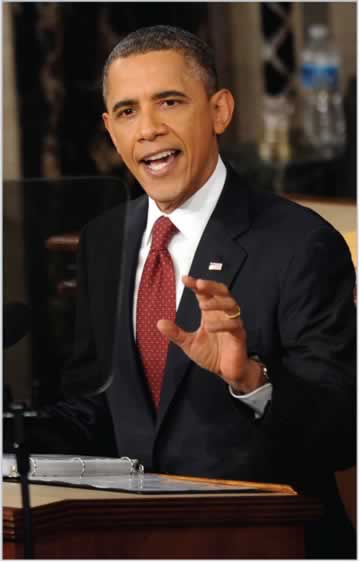
President Obama


Share/Bookmark