http://www.eschoolnews.com/2012/07/05/share-my-lesson-a-free-online-portal-for-teachers-will-debut-this-summer-with-more-than-100000-user-generated-lessons/
The Dillard University Center for Teaching, Learning & Academic Technology Blog
Search DU CTLAT Blog
Thursday, July 5, 2012
eSchool News: ‘Share My Lesson,’ a free online portal for teachers, will debut this summer with more than 100,000 user-generated lessons
http://www.eschoolnews.com/2012/07/05/share-my-lesson-a-free-online-portal-for-teachers-will-debut-this-summer-with-more-than-100000-user-generated-lessons/
EDUCAUSE 2012 Annual Conference
|
EDUCAUSE 2012 Annual Conference
LinkedIn: Top 10 issues for Project Managers
Started by Andres Gonzalez,
Head of Marketing at Ark Group Australia
Before you drop down to the list, we are going to plug two events that are coming up that might be useful to you. Both workshops are set up by internationally recognised experts in IT procurement and programme management.
Programme Management in a Business Contexthttp://www.arkgroupaustralia.com.au/Events-E035Progmgt.htm
One-day workshop
Facilitated by: Michel Thiry, Managing Director, Valense
Negotiating Major IT Contractshttp://www.arkgroupaustralia.com.au/Events-E034NegotiatingIT.htm
Understanding and leveraging your legal and commercial bargaining strengths
One-day workshop (includes complimentary report)
Facilitated by: Julian Gyngell, MLB, LLB, Dip IPL Solicitor and attorney with more than 25 years of experience in IT contract negotiation, and formerly a Partner in top-tier law firms in London, Hong Kong and Sydney
TOP 10 ISSUES FOR PROJECT MANAGERS
For those of you who are sitting in the office thinking "no one has it harder than me in this company" then this story might make you feel a little better. Every role has a set of challenges and today we are pulling together a few that project managers face from day to day:
1. The administrative tasks associated with running several projects
2. “Sharing of resources. Not only do you have to track and allocate your own resources time you have to monitor someone else’s project timelines to keep the productivity level at par. Then the game of let’s make a deal starts—I can lend you developer X for Monday and Wed, if you let me have developer Y for two days to finish a GUI interface..oh and I will throw in a lunch.
3. Handling vendor related tasks, such as dealing with contracts, negotiation rates and policies, and SLAs. Especially dealing with union shops, as they have different rates for jobs at certain times.. All play a key part in your project success when you are trying to stay under budget and on time.
4. Dependencies and having to rely on other people for success.
5. Lots of negative feedback & ‘waffling’ from various team members, as they don’t consider you to be on a ‘management’ level even though you’re responsible for and tracking their work.
6. Difficulties setting correct scheduling/resource expectations with the customer, when they don’t fully understand dependencies on different projects (they want everything done ASAP). And, in turn, when you can’t deliver on their requests, you’re viewed as the bad guy.
7. Virtual/Multinational teams present added challenges…not taught in your typical college class or PM boot camp:
8. While budgets are part of the triple constraint, major aspect of project management, it is somewhat rare for the PM to actually own the budget. Often you are given a number before you get out of concept phase or monies are shifted at the exec level without input from the PM. Often, actual budget control turns into simply tracking & reporting.
9. With all the talk of managing projects via Twitter, web-based tools, and more collaborative/social mediums there is still a lack of wide-spread adoption of PM/PPM management tools at many organizations. Many projects still cobble together some Excel spreadsheets, static MS Project file, and MS Viso schemas into a PowerPoint presentations. Version control, standardization, collaboration, real-time updates, etc are all so close yet so far away!
10. Project Managers can be typecast pretty quickly, so pick your industry well or jump into a few industries early on.
View the full story at IT Toolbox: http://it.toolbox.com/blogs/kellys-contemplation/top-10-issues-for-project-managers-45150
Programme Management in a Business Contexthttp://www.arkgroupaustralia.com.au/Events-E035Progmgt.htm
One-day workshop
Facilitated by: Michel Thiry, Managing Director, Valense
Negotiating Major IT Contractshttp://www.arkgroupaustralia.com.au/Events-E034NegotiatingIT.htm
Understanding and leveraging your legal and commercial bargaining strengths
One-day workshop (includes complimentary report)
Facilitated by: Julian Gyngell, MLB, LLB, Dip IPL Solicitor and attorney with more than 25 years of experience in IT contract negotiation, and formerly a Partner in top-tier law firms in London, Hong Kong and Sydney
TOP 10 ISSUES FOR PROJECT MANAGERS
For those of you who are sitting in the office thinking "no one has it harder than me in this company" then this story might make you feel a little better. Every role has a set of challenges and today we are pulling together a few that project managers face from day to day:
1. The administrative tasks associated with running several projects
2. “Sharing of resources. Not only do you have to track and allocate your own resources time you have to monitor someone else’s project timelines to keep the productivity level at par. Then the game of let’s make a deal starts—I can lend you developer X for Monday and Wed, if you let me have developer Y for two days to finish a GUI interface..oh and I will throw in a lunch.
3. Handling vendor related tasks, such as dealing with contracts, negotiation rates and policies, and SLAs. Especially dealing with union shops, as they have different rates for jobs at certain times.. All play a key part in your project success when you are trying to stay under budget and on time.
4. Dependencies and having to rely on other people for success.
5. Lots of negative feedback & ‘waffling’ from various team members, as they don’t consider you to be on a ‘management’ level even though you’re responsible for and tracking their work.
6. Difficulties setting correct scheduling/resource expectations with the customer, when they don’t fully understand dependencies on different projects (they want everything done ASAP). And, in turn, when you can’t deliver on their requests, you’re viewed as the bad guy.
7. Virtual/Multinational teams present added challenges…not taught in your typical college class or PM boot camp:
8. While budgets are part of the triple constraint, major aspect of project management, it is somewhat rare for the PM to actually own the budget. Often you are given a number before you get out of concept phase or monies are shifted at the exec level without input from the PM. Often, actual budget control turns into simply tracking & reporting.
9. With all the talk of managing projects via Twitter, web-based tools, and more collaborative/social mediums there is still a lack of wide-spread adoption of PM/PPM management tools at many organizations. Many projects still cobble together some Excel spreadsheets, static MS Project file, and MS Viso schemas into a PowerPoint presentations. Version control, standardization, collaboration, real-time updates, etc are all so close yet so far away!
10. Project Managers can be typecast pretty quickly, so pick your industry well or jump into a few industries early on.
View the full story at IT Toolbox: http://it.toolbox.com/blogs/kellys-contemplation/top-10-issues-for-project-managers-45150
13 hours ago
LinkedIn: Top 10 issues for Project Managers
Tuesday, July 3, 2012
Dillard University CTLAT Sabbatical Leave Program Due Sept 3 2012
THE AFRO-AMERICAN BOOK STOP ESSENCE 2012 MUSIC FESTIVAL WEEKEND BOOK SIGNINGS
BAYOU SOUL
WRITERS AND READERS CONFERENCE
THURSDAY
JULY 5, 2012 1-2 PM
MAIN
LIBRARY (Tulane Ave.)
MCGLOTHIN
MCGLOTHIN


feel free to bring any books you may have by these authors
to get autographed
MEET & GREET WITH BESTSELLING AUTHORS
THURSDAY JULY 5, 7-9 PM HOLIDAY INN
DOWNTOWN MAIN BALLROOM
(COLLEGE FUNDRISER $50.00 EACH)
INCLUDING; MARY MONROE, RM JOHNSON, RESHONDA TATE BILLINGSLEY,
TIFFANY WARREN, ERNEST HILL, VICTOR MCGLOTHIN, RONLYN DOMINIGUE, TAMIKA
NEWHOUSE, NALEIGHNA KAI AND MORE.
I have FREE TICKETS available to the first 5 people to respond to this email
BOOKSING/READING
FEATURING MARY B. MORRISON
author of "IF I CAN'T HAVE YOU"
THE NEW ORLEANS EAST REGIONAL LIBRARY
5641 Read Blvd

THE AFRO-AMERICAN BOOK STOP ESSENCE 2012 MUSIC FESTIVAL WEEKEND BOOK SIGNINGS
Clickers 2012 Conference in Chicago, IL on October 25-26
|
Clickers 2012 Conference in Chicago, IL on October 25-26
Monday, July 2, 2012
EduDemic: The Visual Guide To Facebook Reporting & How College Financial Aid Works
EduDemic
|
|
Posted: 30 Jun 2012 11:00 AM PDT
![]()
Ever wonder what happens when you report something
as "spam" on facebook? Of course you have. Well, wonder no more.
|
|
Posted: 30 Jun 2012 06:00 AM PDT
![]()
Financial aid is not an easy puzzle to solve, and a
few facts seem to contribute to that complexity. But this infographic can
help.
|
EduDemic: The Visual Guide To Facebook Reporting & How College Financial Aid Works
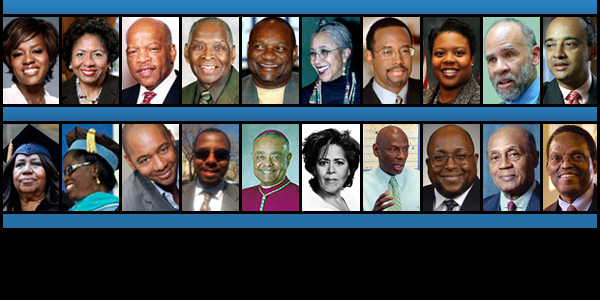
Journal of Blacks in Higher Education: Honorary Degrees Awarded to Blacks in 2012 From the Nation’s Highest-Ranked Universities

http://www.jbhe.com/2012/06/honorary-degrees-awarded-to-blacks-in-2012-from-the-nations-highest-ranked-universities/
This spring
the nation’s 30 highest-ranked national universities awarded 22 honorary
degrees to African Americans and other Black scholars. A year ago, this same
group of universities awarded 21 honorary degrees to Blacks. (Several of the
nation’s highest-ranking universities, including Stanford, Berkeley, UCLA,
Cornell, and the University of Virginia, do not award honorary degrees on a
regular basis, if at all.)
Brown
University and the University of Pennsylvania each awarded honorary degrees to
three Black scholars this spring. Congressman John Lewis of Georgia received
honorary degrees from three high-ranking universities this year.
With the addition of 16 honorary
degrees awarded to Blacks from the nation’s leading liberal arts colleges (See
JBHE post here.), all told the nation’s highest-ranked colleges and
universities awarded 38 honorary degrees to Blacks this spring. This compares
to 34 honorary degrees awarded to Blacks in 2011.
Here
are this year’s honorands from the nation’s highest-ranked universities.
Brown
University
Viola Davis is an actress of the stage, television,
and film. She received an academy award nomination for her role in The Help and has won two
Tony Awards. A native of South Carolina, she grew up in Rhode Island and is a
graduate of Rhode Island College.
Ruth Simmons recently stepped down as president
of Brown University. She has served in that post since 2001. Previously, she
was president of Smith College. Dr. Simmons will remain on the Brown University
faculty.
John Lewis is a U.S. Congressman from Georgia.
Democratic leader in the House Nancy Pelosi has called him “the conscience of
the U.S. Congress.”
Columbia
University
Muhal Richard Abrams is a jazz musician
and composer. A native of Chicago, he taught himself how to play the piano.
Duke
University
Darryl Hunt is the founder of Darryl Hunt Project for
Freedom and Justice, which provides assistance to individuals who have been
wrongfully incarcerated. Hunt was convicted of rape and murder in 1984 and
spent 19 years in prison. New DNA evidence exonerated him in 2004.
Emory
University
Camille Billops is a celebrated sculptor and
printmaker. Together with her husband, she assembled a vast an archive of
African American cultural materials that they have donated to the Robert W.
Woodruff Library at Emory University.
Benjamin Carson is professor of neurosurgery,
oncology, plastic surgery, and pediatrics at the Johns Hopkins School of
Medicine. In 1987 he was the first surgeon to perform a successful separation
of craniopagus twins joined at the back of the head.
Georgetown
University
Kayla Henderson is the chancellor of the
Washington, D.C., public school system. She holds bachelor’s and master’s
degrees from Georgetown University.
John A. Payton, who died earlier this year, was
awarded a posthumous honorary degree. He was a prominent civil rights attorney
who was director-counsel of the NAACP Legal Defense and Education Fund.
Harvard
University
K. Anthony Appiah is the Laurance S.
Rockefeller University Professor Of Philosophy and the University Center for
Human Values at Princeton University. He joined the Princeton faculty in 2002
after previously teaching at Harvard. He holds bachelor’s, master’s, and Ph.D.
degrees from Cambridge University.
John Lewis, the son of sharecroppers, is a veteran of
the civil rights movement having participated in the Freedom Rides, the March
on Washington, and the Bloody Sunday voting rights march in Selma, Alabama.
Princeton
University
Aretha Franklin, the Queen of Soul, recorded her
first album at age 18 and has recorded 223 albums in a career spanning more
than 50 years.
Tufts
University
Cecillia Ibeabuchi, a native of
Nigeria, is clinic manager of Boston Health Care for the Homeless Program’s
busy downtown medical clinic.
University
of North Carolina at Chapel Hill
Branford Marsalis, a jazz musician,
composer, and bandleader, has taught at Michigan State University, San
Francisco State University, and North Carolina Central University.
University
of Notre Dame
Jude Banatte is the director of programming for
Catholic Relief Services in Haiti. He played an instrumental role in recovery
efforts following the 2010 earthquake that devastated Haiti.
Wilton Gregory is archbishop and head of the
Archdiocese of Atlanta. He was educated at Loyola University and St. Mary of
the Lake Seminary.
University
of Pennsylvania
Anna Deavere Smith is an actress,
author, and playwright who brings together art and social commentary to create
a unique form of “documentary theater”.
Geoffrey Canada is president and CEO of the
Harlem’s Children’s Zone, which serves more than 11,000 children in Central
Harlem, providing a comprehensive range of educational, social, and medical
services.
John Lewis organized sit-ins at segregated lunch
counters in Nashville as a student at American Baptist College. In 1963 he was
named chair of the Student Nonviolent Coordinating Committee. In 1981 he was
elected to the city council in Atlanta and has served in the U.S. Congress
since 1987.
Wake
Forest University
Willie E. May is the associate director for
laboratory programs at the National Institute of Standards and Technology.
Washington
University
Donald Suggs is an oral surgeon and publisher of
the St. Louis American,
one of the largest African Americans newspapers in the nation. Born in East
Chicago, Indiana, Dr. Suggs earned a bachelor’s degree and a doctorate of
dental surgery from Indiana University.
Yale
University
William Julius Wilson, one of the
nation’s leading urban sociologists, is the Lewis P. and Linda L. Geyser
University Professor at Harvard University. Before coming to Harvard in 1996 he
taught at the University of Chicago for nearly a quarter century.

Journal of Blacks in Higher Education: Honorary Degrees Awarded to Blacks in 2012 From the Nation’s Highest-Ranked Universities
Inside Higher Ed Free Webinar – “Conflicted: Faculty and Online Education” survey results
|
Inside Higher Ed Free Webinar – “Conflicted: Faculty and Online Education” survey results
Research-Focused HBCU’s Should Pay Attention to Fayetteville State U.
http://chronicle.com/blogs/innovations/research-focused-hbcus-should-pay-attention-to-fayetteville-state-u/33207
July 2, 2012, 12:42 pm
According to
a 2008 report by the Congressional Research Service, many HBCU’s face
difficulty competing for federal research dollars with other research
universities. Federal trend data reveal that research-performing HBCU’s have
not shared proportionately in the distribution of federal research and
development (R&D) dollars going to colleges and universities. Although
funding to HBCU’s has increased in the past 10 years in absolute terms, it
remains only a small fraction of the total awarded to all U.S. colleges and
universities. Moreover, the report noted that among HBCU’s, funding was
unevenly distributed (much like it is among majority institutions). Funding for
non-HBCU’s also is concentrated at selected institutions. For example, in
FY2005, the top 10 HBCU’s (in terms of receipt of federal R&D support to
HBCU’s) accounted for approximately 52.7 percent of total federal R&D
support, and the top 20 HBCU’s accounted for approximately 72 percent of total
R&D support. This trend leaves 85 HBCU’s, many that would benefit greatly
from R&D dollars, without funding.
One of the
main reasons why HBCU’s have difficulty securing federal grants is that they
often lack the infrastructure for securing them as well as the infrastructure
for maintaining them. Managing larger federal grants takes an inordinate amount
of work. Most HBCU’s have very few staff members in the grant writing and
management area. In addition, faculty members have heavy teaching and advising
responsibilities.
Despite some
of these challenges, Fayetteville State University is gearing up to secure
federal dollars and become a Center for Excellence with its Center for Defense
and Homeland Security and their approach is a model for other HBCU’s. First,
the center, which is directed by Curtis Charles, is interdisciplinary in its
approach, bringing together 22 of the institution’s top faculty members that
focus on issues of national security. With this approach, the institution is
able to garner buy-in across the institution for the center. Second, with the
center, Chancellor James Anderson is set on preparing the next generation of
individuals working in national security and well as emergency management.
Third, Fayetteville State put a business model in place and hired personnel
that have great success in both securing and managing large federal grants.
Fourth, the institution has created partnerships with industry, including
faculty mentorship programs, student workstudy opportunities, and co-applying
for grants. Fifth, the center has both an internal and external advisory board.
The internal board cuts across the various schools and provides institutional
buy in for the center’s ideas. The external board is made up of key leaders in
industry, higher education, and government. Sixth, the institution is engaging
its alumni in the center and nurturing their support. And lastly, the
institution is bringing together faculty research, industry, undergraduate
research, and K-12 outreach in one endeavor, making Fayetteville State a strong
contender to garner federal support for their center.
Although
many of the approaches being used by Fayetteville State are commonplace at
large research universities, they are not at HBCU’s. FSU has one of the most
comprehensive approaches in place and other research-focused HBCU’s should pay
attention.
This
entry was posted in Uncategorized and tagged Black colleges, Center for Defense and Homeland Security, Curtis Charles, Fayetteville State University, federal grants, James Anderson, North Carolina. Bookmark the permalink.
Research-Focused HBCU’s Should Pay Attention to Fayetteville State U.
Subscribe to:
Posts (Atom)